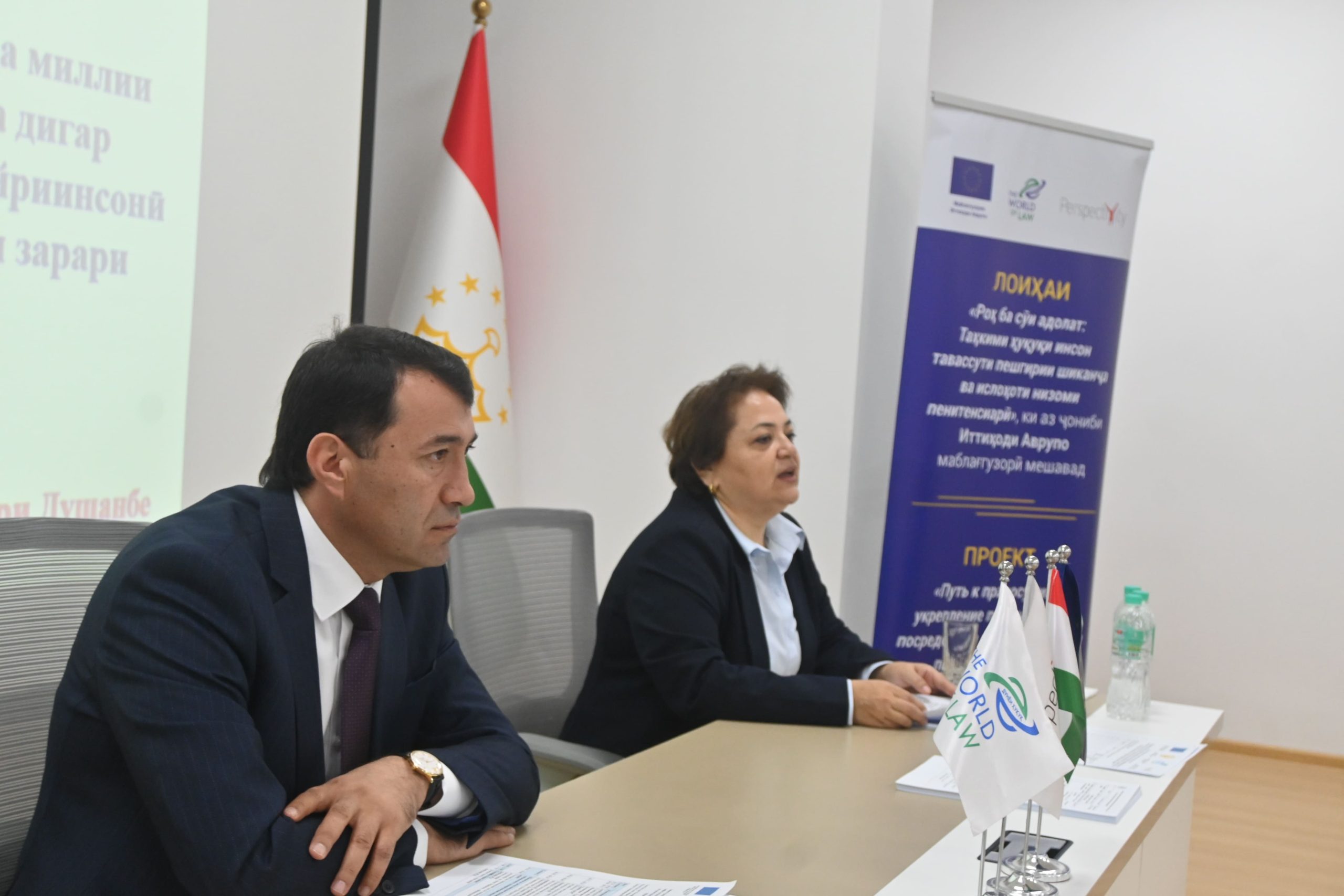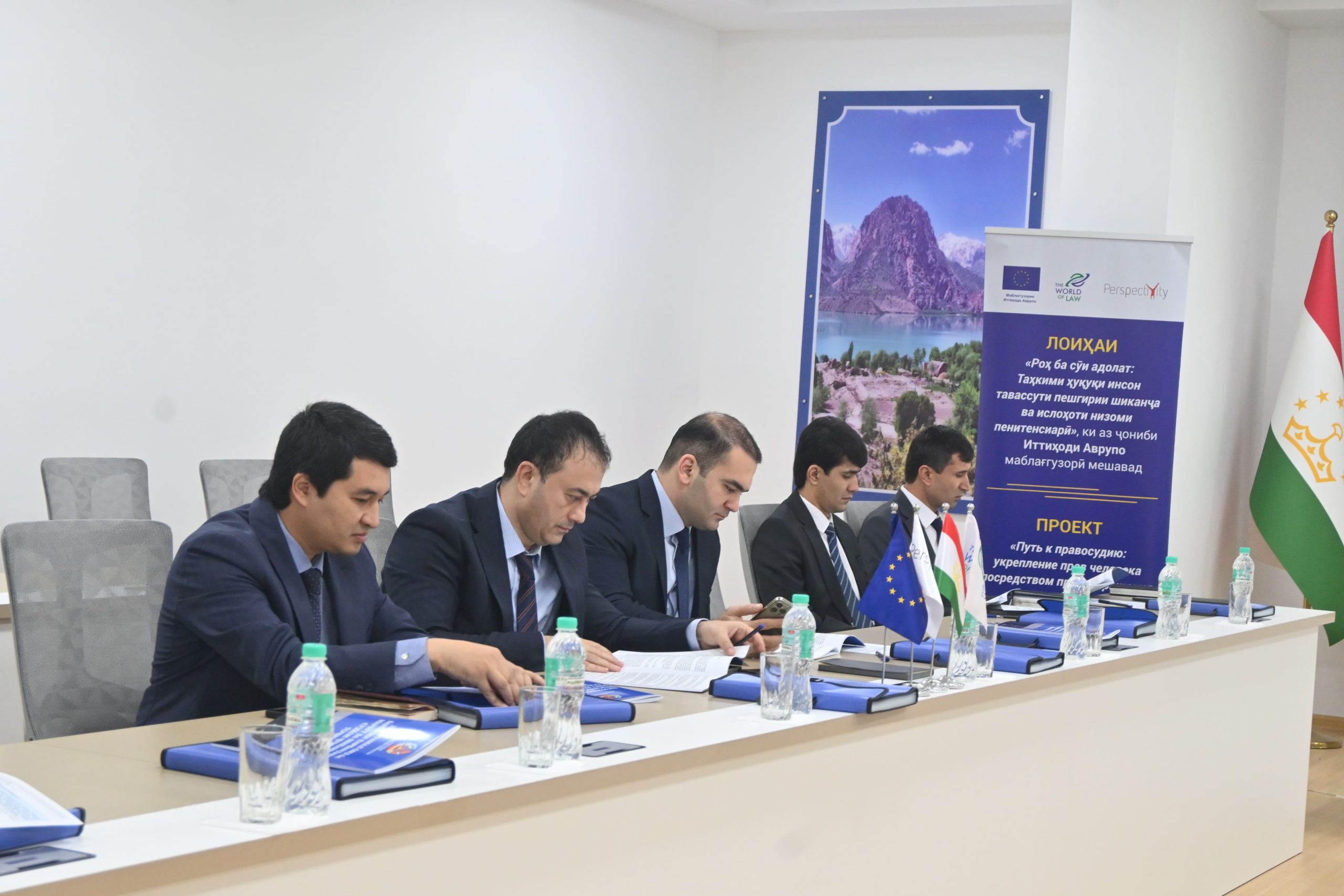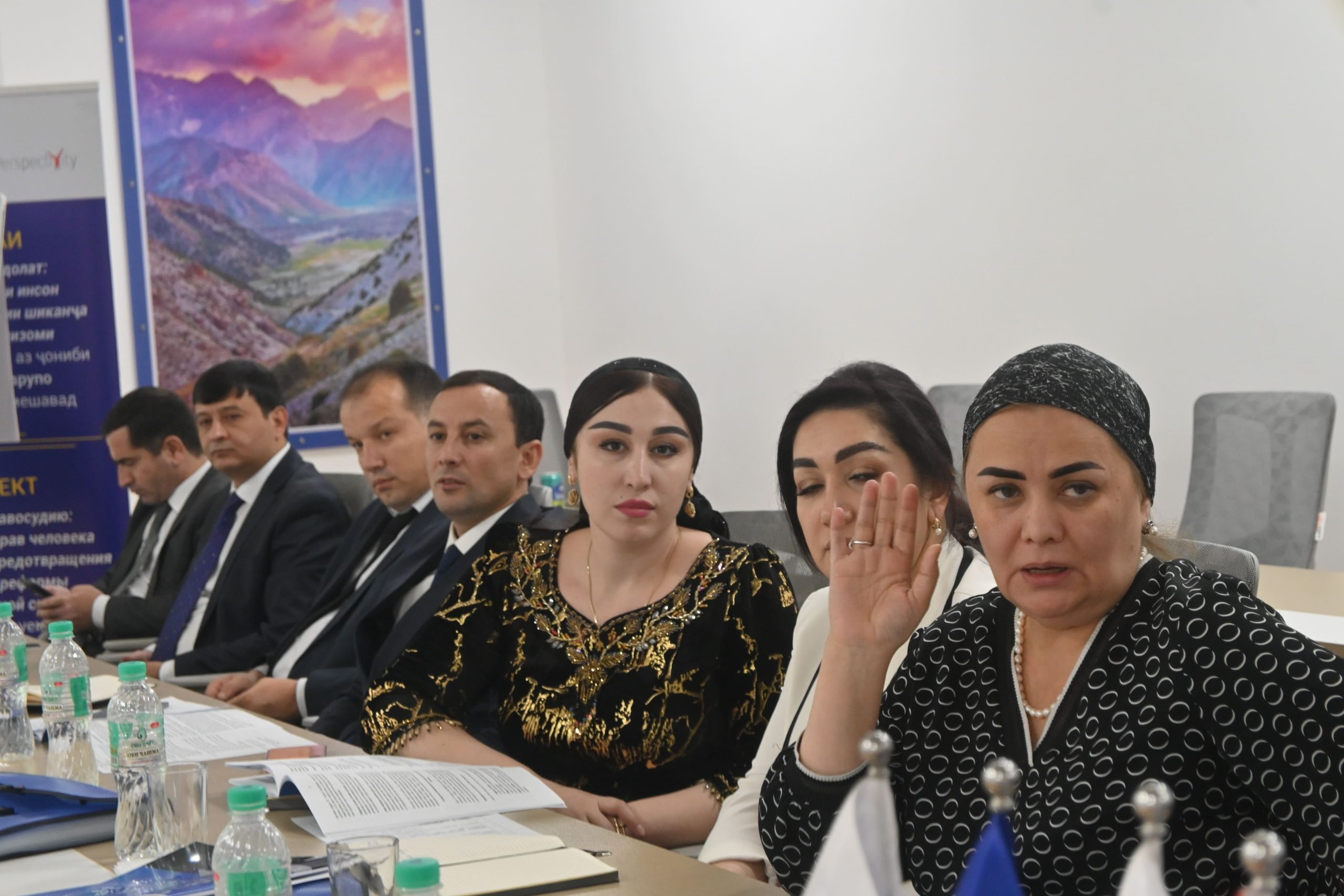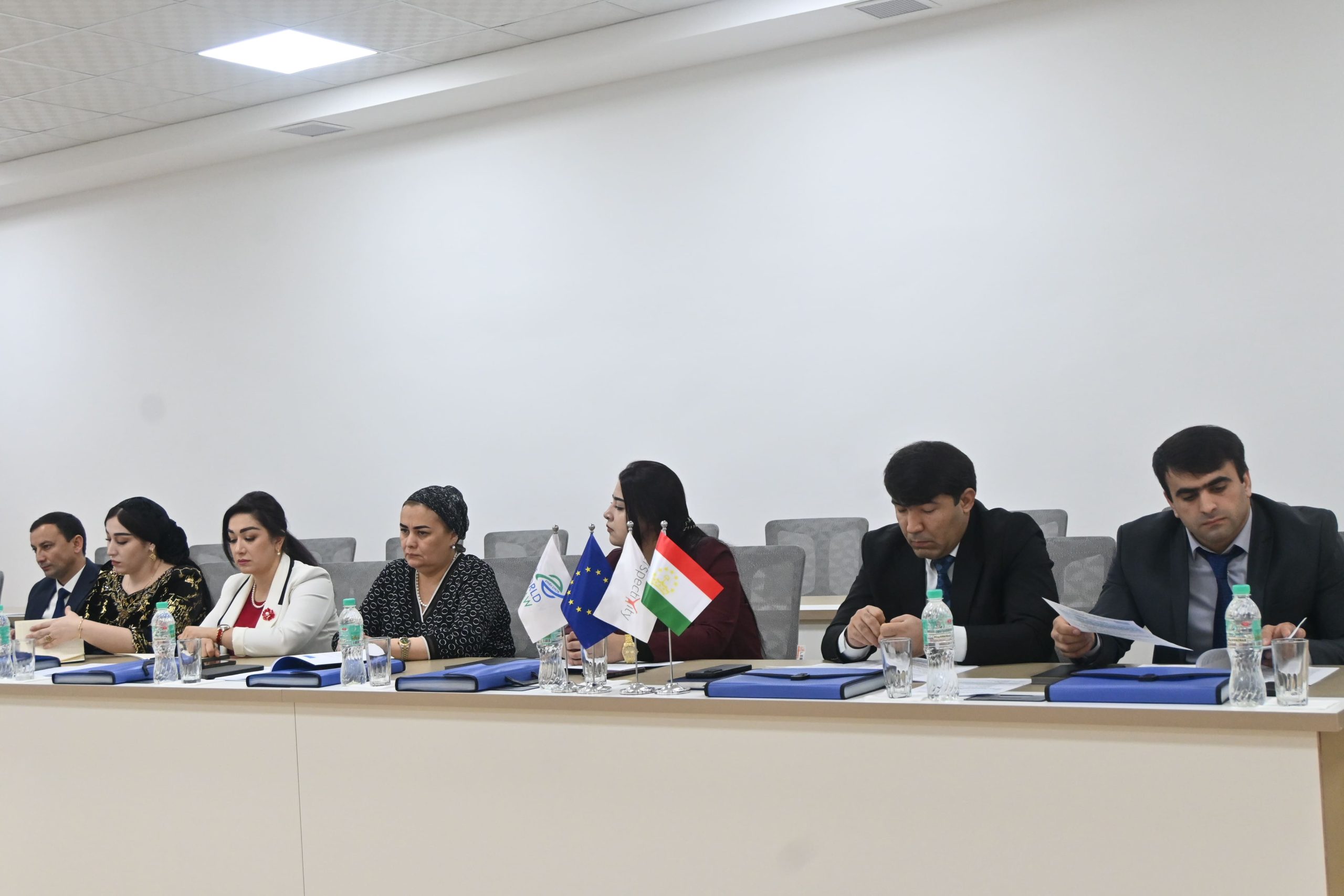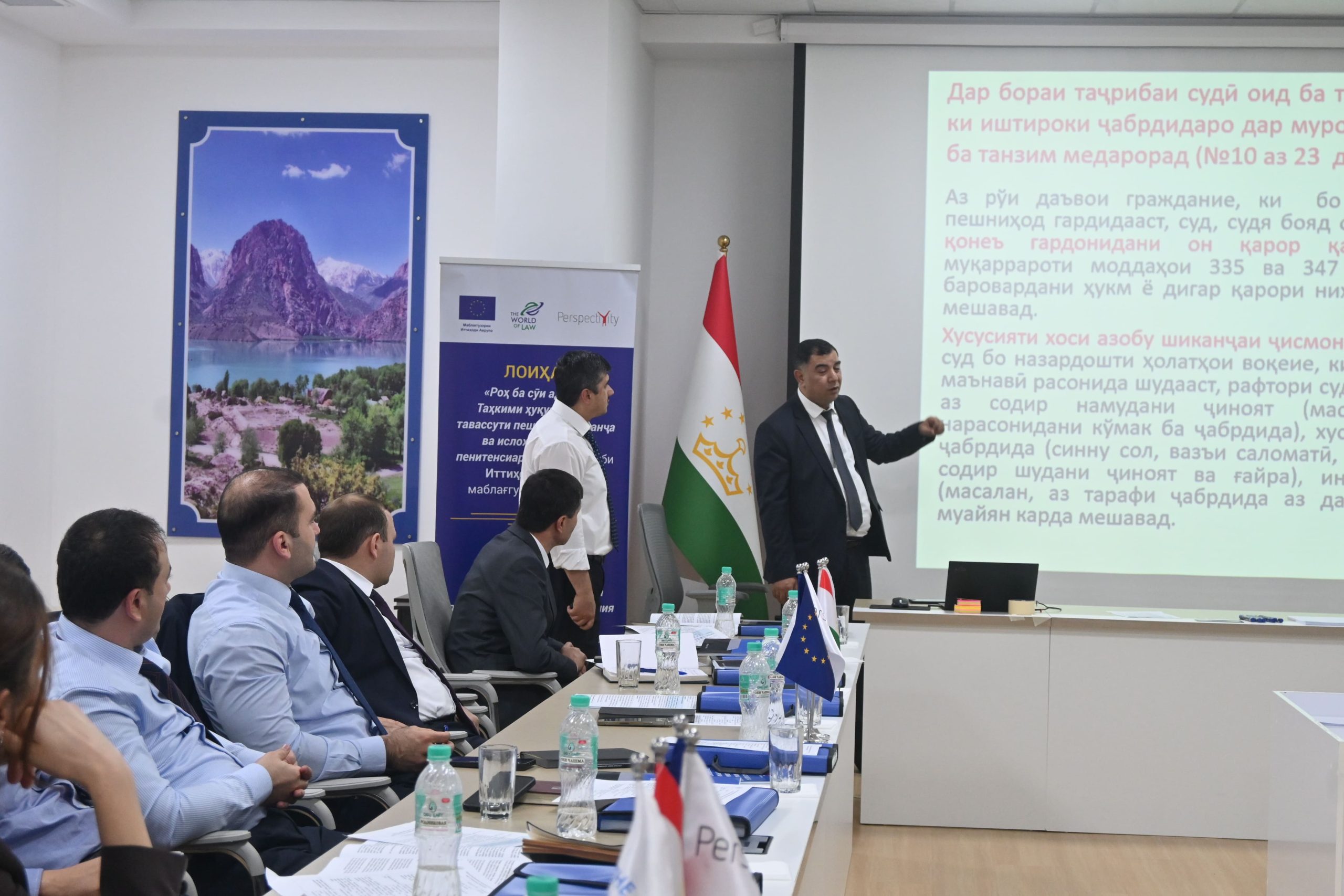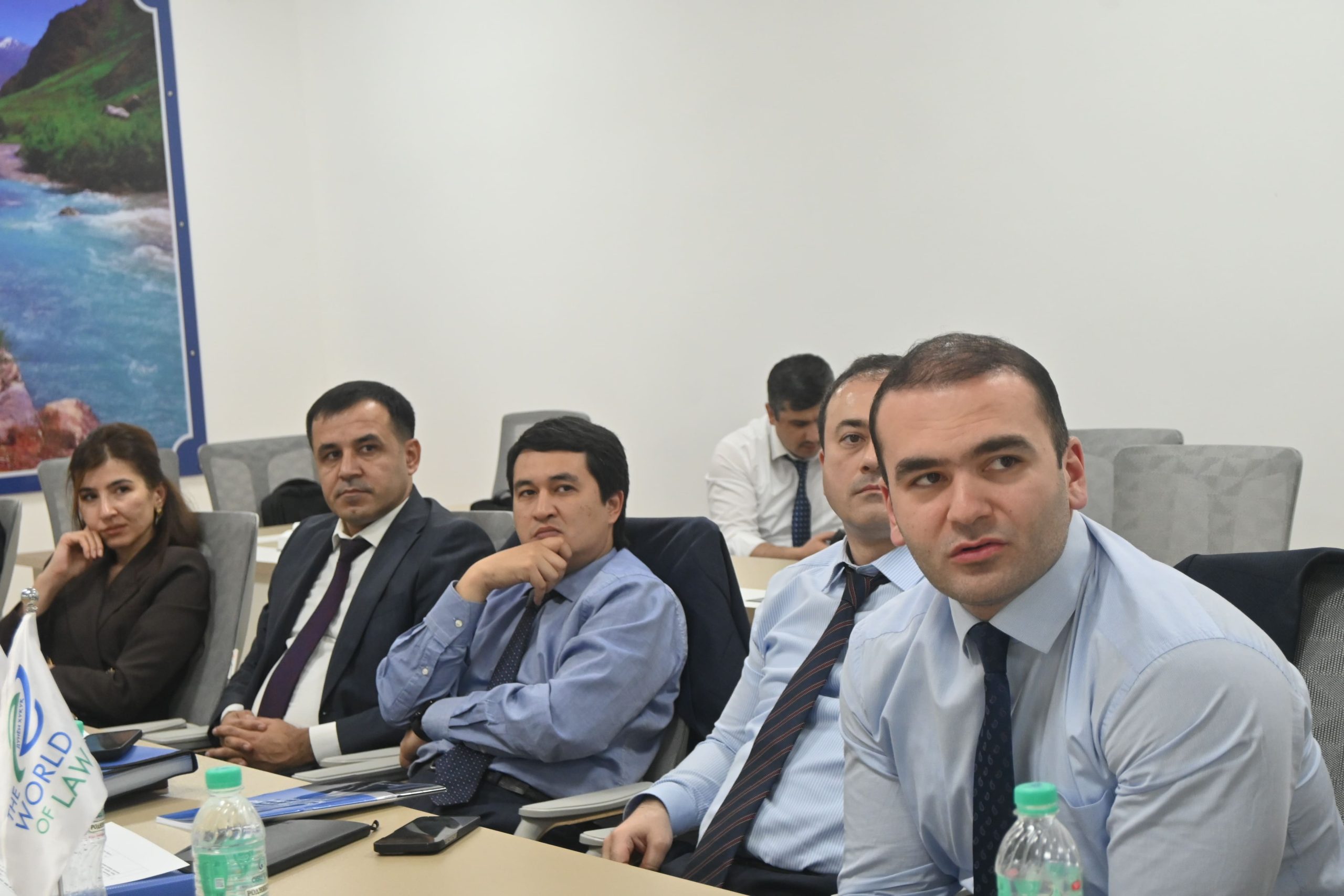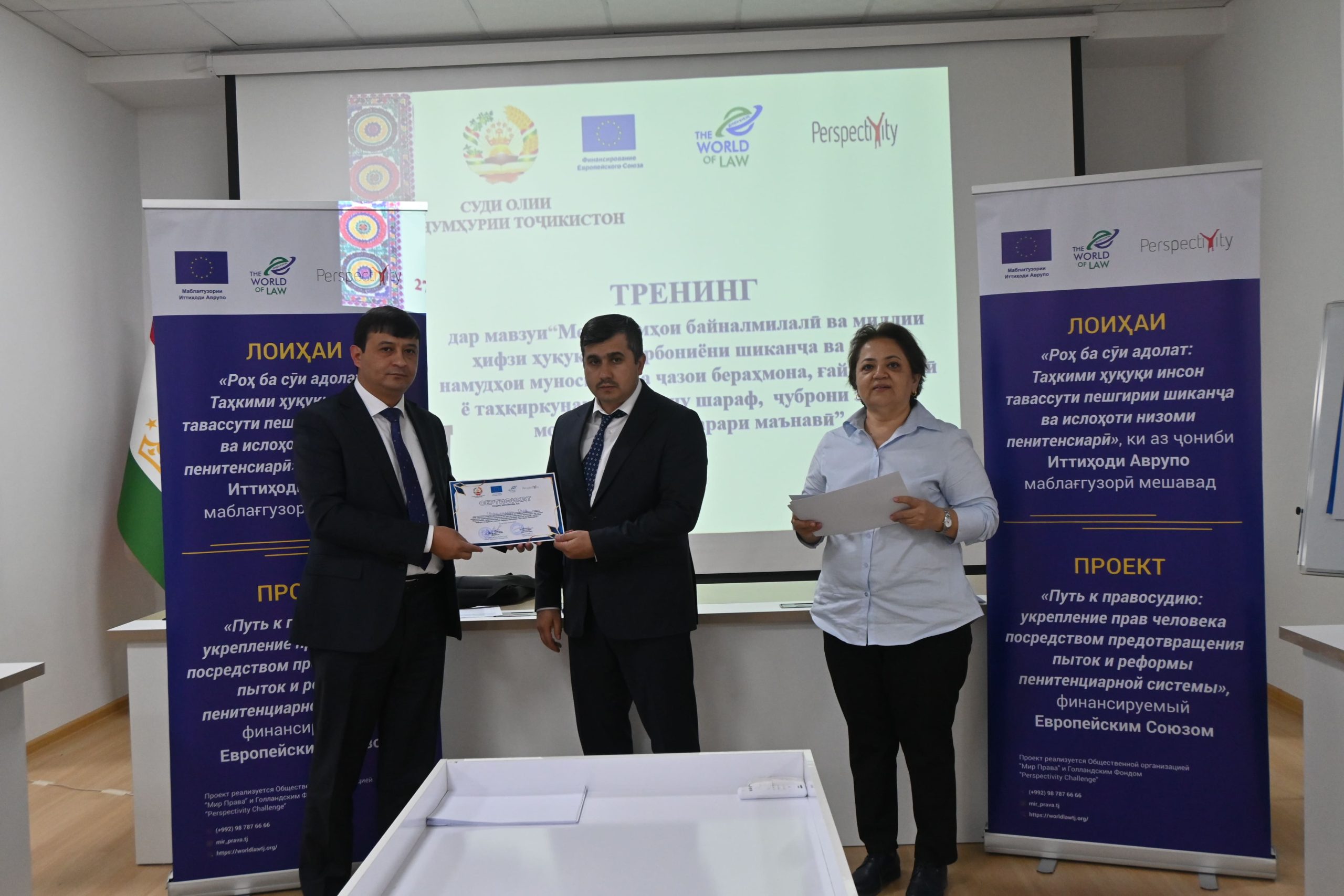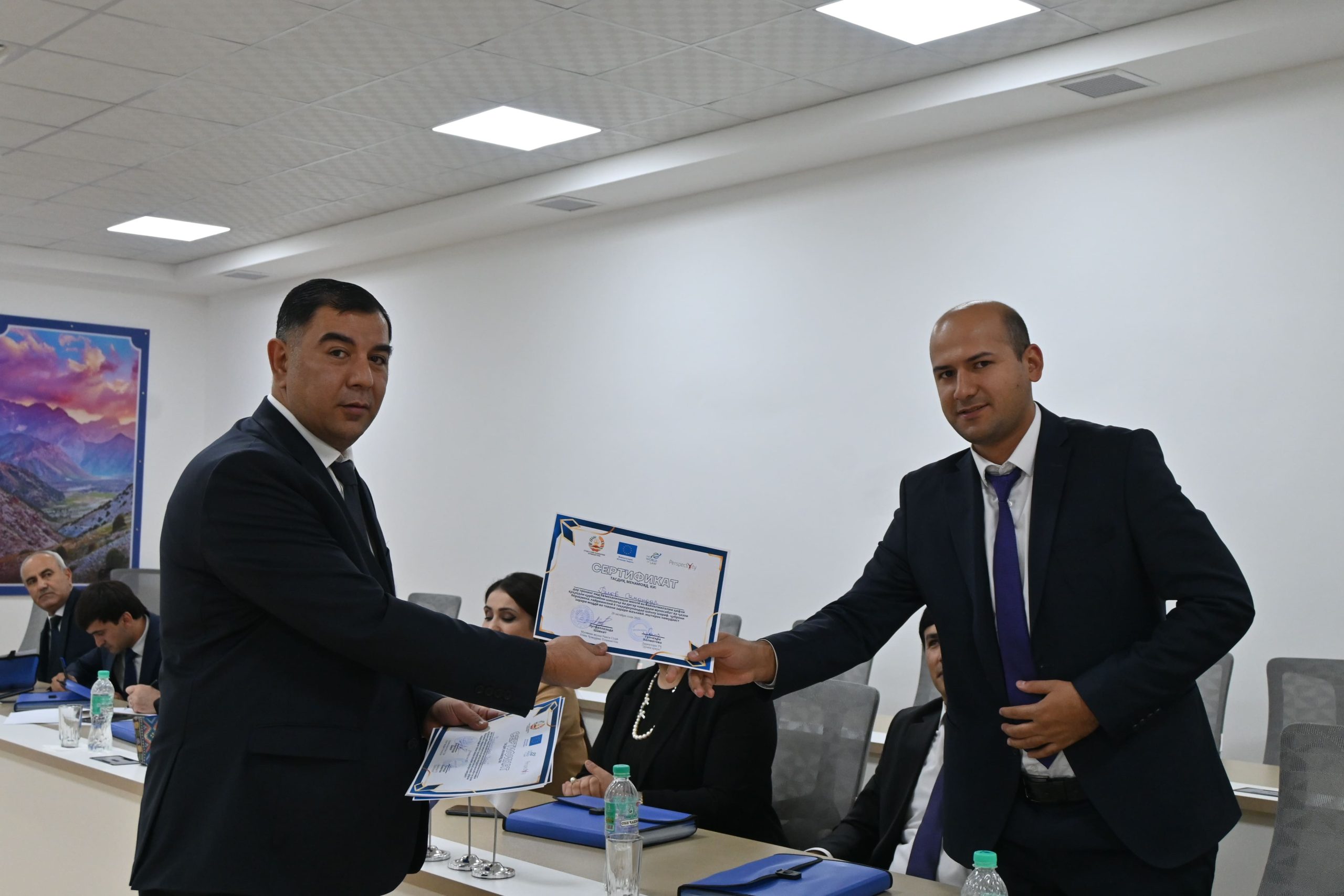
Dushanbe, 27-30 October – A series of trainings for judges was held in the Republic of Tajikistan, focusing on international and national mechanisms for protecting the rights of victims of torture and other cruel, inhuman or degrading treatment or punishment, as well as issues of compensation for material damage and moral harm. The event was organized by the Public Organization “World of Law” in partnership with the Supreme Court of the Republic of Tajikistan within the framework of the project “Path to Justice: Strengthening Human Rights through Torture Prevention and Penitentiary System Reform”, funded by the European Union.
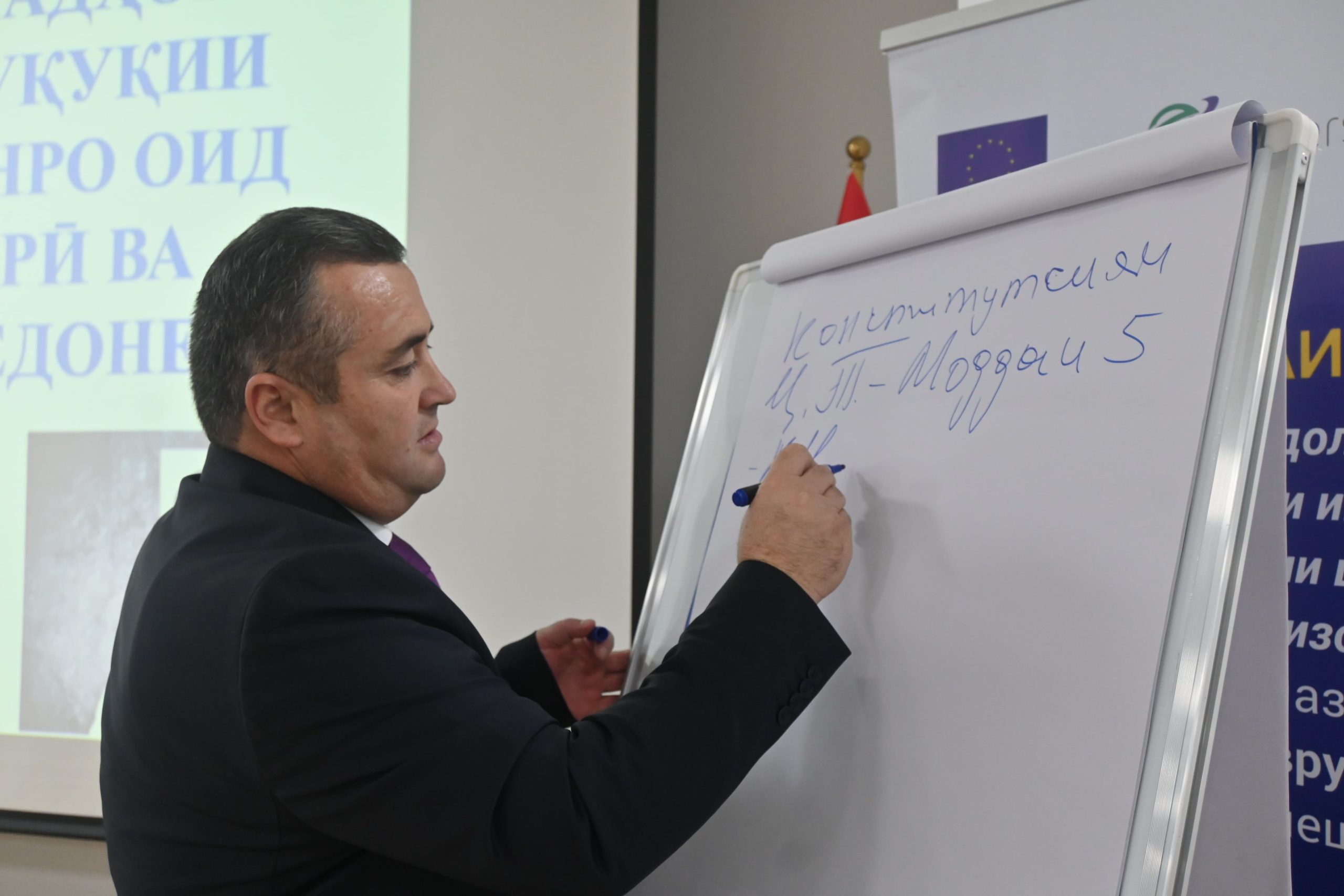
The trainings were delivered by judges of the Supreme Court of the Republic of Tajikistan – Bobozoda M.D. and Alinazarzoda Sh. Over the course of four training sessions, approximately 120 representatives of the judiciary were trained.
The training programme covered international and national standards on the prohibition of torture, specific aspects of judicial consideration of cases related to torture and ill-treatment, as well as the legal framework for compensation for harm suffered by victims. Participants were provided with practical tools for applying international norms and principles in national judicial practice.
“The adjudication of cases related to torture and ill-treatment is one of the most complex areas of judicial practice. It is essential for judges to have a unified approach to the qualification of such cases and the application of international standards. Such trainings contribute to strengthening judicial independence and protecting the rights of victims,” emphasized Gulchehra Kholmatova, Director of the Public Organization “World of Law.”
Conducting such activities contributes not only to enhancing the professional competencies of judges but also to fostering dialogue between the judiciary, the expert community, and human rights organizations, thereby creating a foundation for more systematic and sustainable promotion of human rights standards in national judicial practice. Following the trainings, participants emphasized the importance of applying the knowledge gained in their daily work, including in cases involving violations of the rights of detainees and convicted persons.