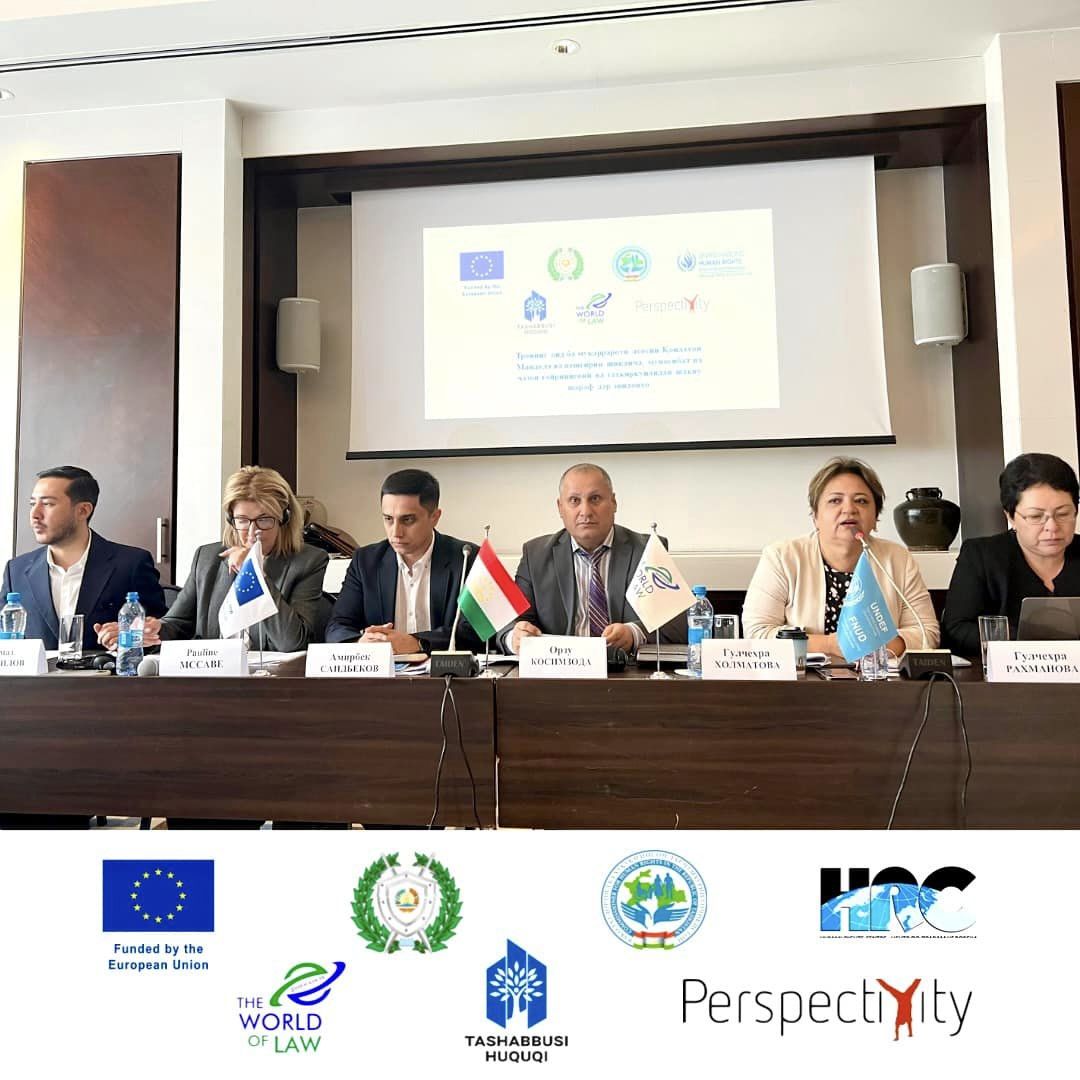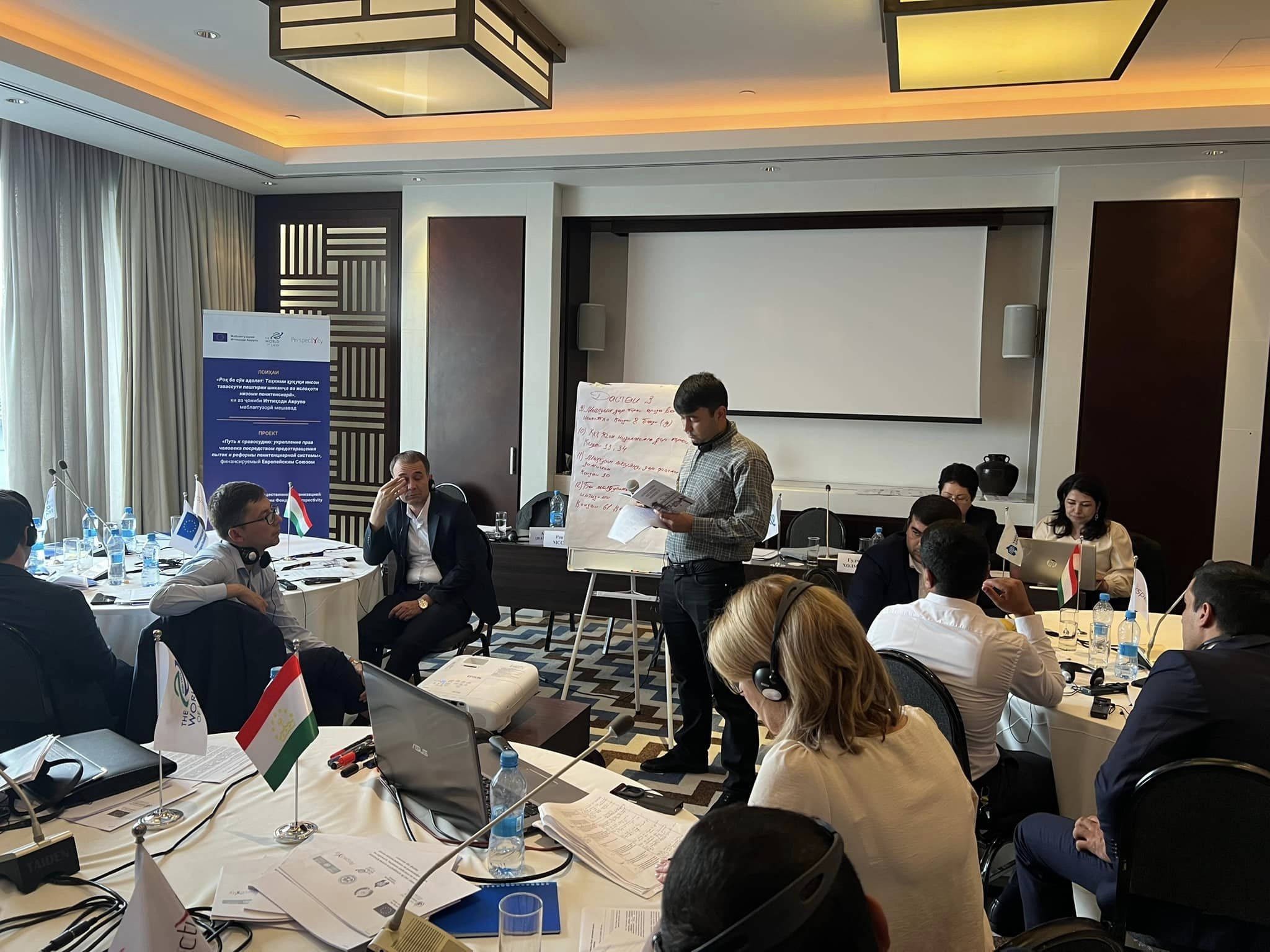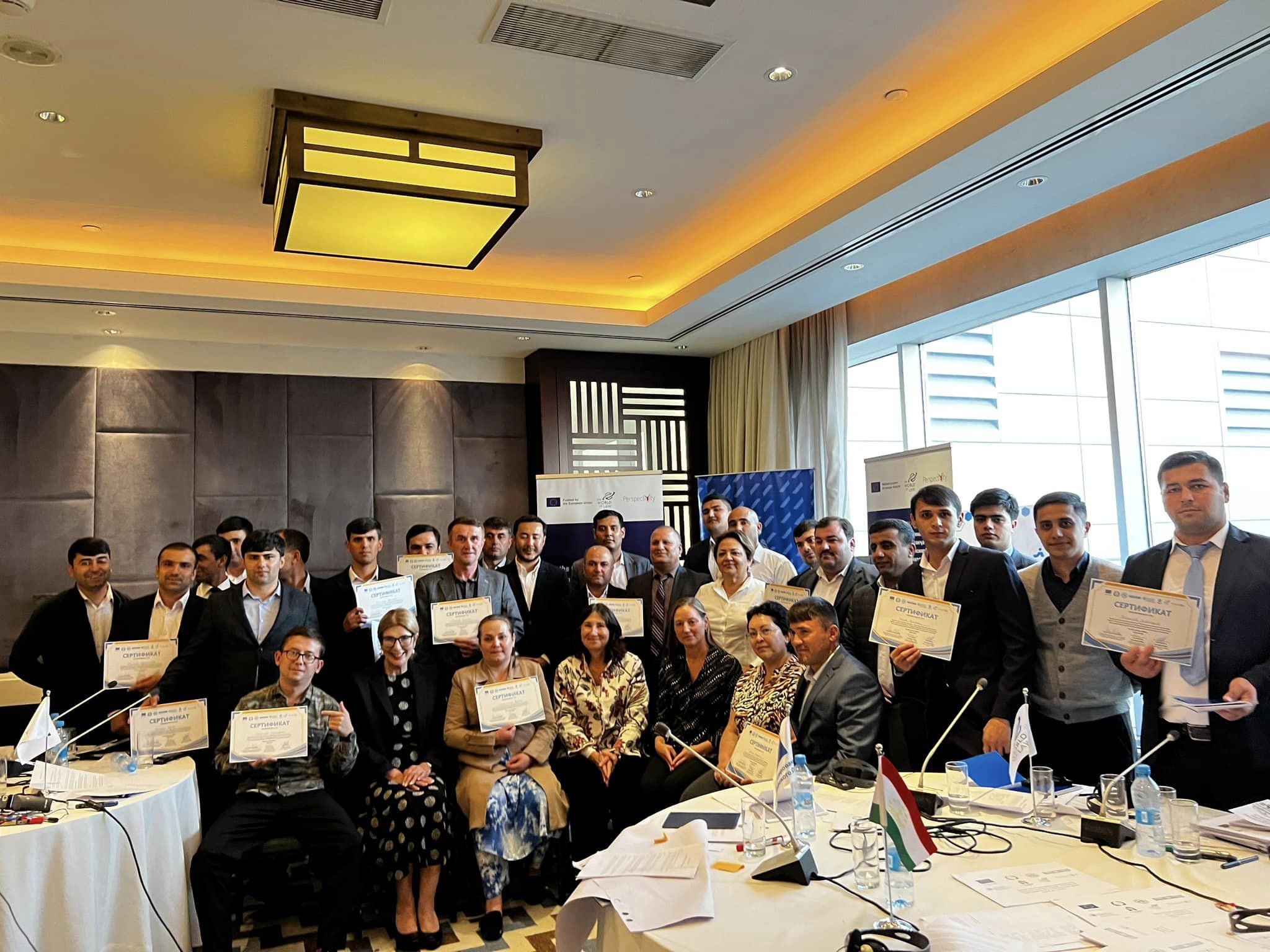
On October 15–16, a two-day training was held in Dushanbe for staff of the Main Department for the Execution of Criminal Sentences (GUIN) of the Ministry of Justice of the Republic of Tajikistan on international human rights standards, in particular the United Nations Standard Minimum Rules for the Treatment of Prisoners (the Nelson Mandela Rules) and the United Nations Rules for the Treatment of Women Prisoners and Non-custodial Measures for Women Offenders (the Bangkok Rules).
The training brought together 25 staff members from various correctional institutions and pre-trial detention facilities under the Main Department for the Execution of Criminal Sentences of the Ministry of Justice of the Republic of Tajikistan. The event addressed key principles of the Nelson Mandela Rules, the protection of the rights of women and children in places of detention, as well as issues related to healthcare, rehabilitation, and the social reintegration of convicted persons during and after the completion of their sentences.
“We would like to thank the Main Department for the Execution of Criminal Sentences of the Ministry of Justice of the Republic of Tajikistan for their support and cooperation in conducting this training aimed at strengthening the capacity of correctional institution staff and medical personnel. We expect that this training, as well as other activities within the framework of the project ‘Path to Justice: Strengthening Human Rights through the Prevention of Torture and Reform of the Penitentiary System,’ will contribute to the improvement of human rights protection and the prevention of torture in Tajikistan,” said Isabel Uris Hernández, Head of Cooperation at the Delegation of the European Union in Tajikistan.
“The training is aimed at strengthening the knowledge and skills of penitentiary staff so that they can effectively contribute to the rehabilitation and social reintegration of convicted persons, especially women and children. We hope that this event will become a step toward improving detention conditions and protecting the rights of prisoners in Tajikistan,” stated Gulchehra Rahmanova, Director of the Public Foundation “Tashabbusi Huquqi,” during the training.
“Tajikistan is a party to many binding international human rights treaties, including the International Covenant on Civil and Political Rights and the UN Convention against Torture. In addition, there are important international instruments of a non-binding nature that nevertheless play a significant role in the development and promotion of human rights, such as the Nelson Mandela Rules and the Bangkok Rules. One of the objectives of these trainings was to educate penitentiary staff on these soft law standards, with a particular emphasis on the rehabilitation and reintegration of convicted persons,” said Gulchehra Kholmatova, Director of the Public Organization “World of Law,” in her opening remarks.
The event was held within the framework of the projects “Path to Justice: Strengthening Human Rights through the Prevention of Torture and Reform of the Penitentiary System,” funded by the European Union, and “Strengthening the Capacity of Civil Society to Promote Prisoners’ Rights in Tajikistan,” funded by the United Nations Democracy Fund (UNDEF). The training was organized by the Public Organization “World of Law” and the Dutch Foundation “Perspectivity Challenge,” in partnership with the Main Department for the Execution of Criminal Sentences of the Ministry of Justice of the Republic of Tajikistan and the Public Foundation “Tashabbusi Huquqi.”